
Adhesives
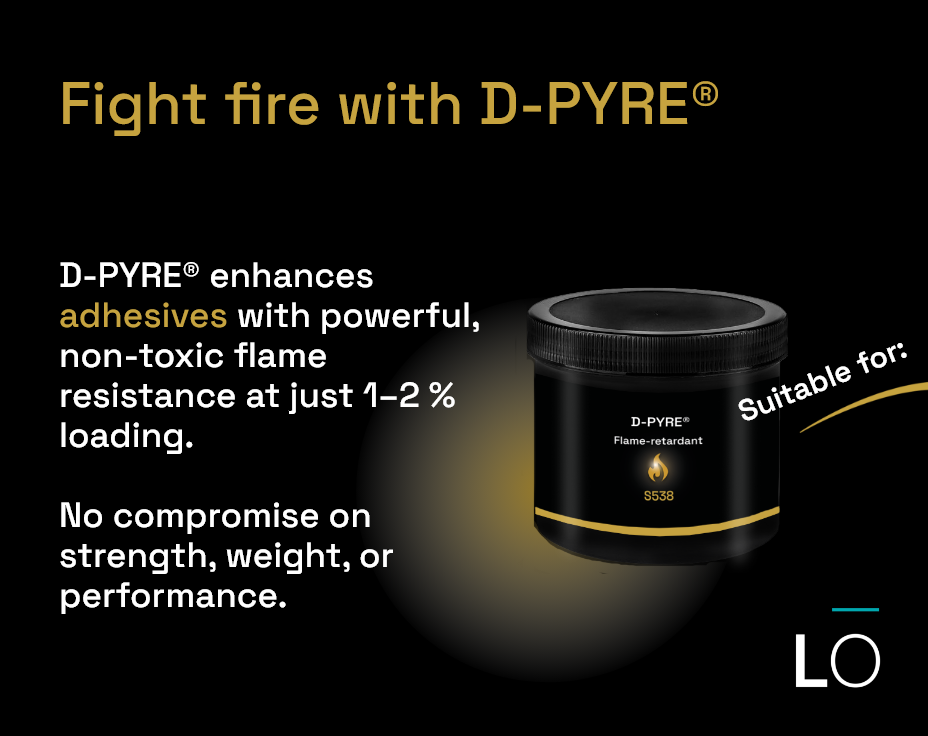
D-PYRE® enhances the performance of industrial adhesives, offering durable and non-toxic bonding with built-in flame-retardant properties.

Our D-PYRE® series consists of POSS-based materials that are specifically designed to enhance the performance and safety of industrial adhesives, providing non-toxic flame-retardant properties.
Non-toxic flame-retardant adhesives that don’t compromise performance
Adhesives used in cars, airplanes, and other high-risk environments must meet strict flame-retardant requirements. But in most cases, adding flame retardants reduces adhesive strength and reliability.
With D-PYRE® you get a flame-retardant additive that protects without compromise. Even at low loadings (as little as 1–2%), D-PYRE® delivers high flame resistance while preserving full adhesive performance. Once cured, the adhesive forms a thermoset polymer matrix, meaning it cannot be re-melted or reshaped, ensuring long-term thermal and structural stability.
Key benefits of D-PYRE® in adhesives:
Non-toxic flame retardancy: Halogen-free and environmentally safe
Minimal loading required: Effective at just 1–2%, reducing cost and formulation complexity
Preserves adhesion strength: Maintains mechanical and bonding properties under stress and heat
Versatile compatibility: Works with a wide range of adhesive chemistries, including epoxies and polyurethanes
Thermally stable: Reliable performance in high-temperature industrial and transportation settings
Lightweight and efficient: Ideal for mobility sectors where every gram matters
Application areas - D-PYRE in adhesives

Aerospace

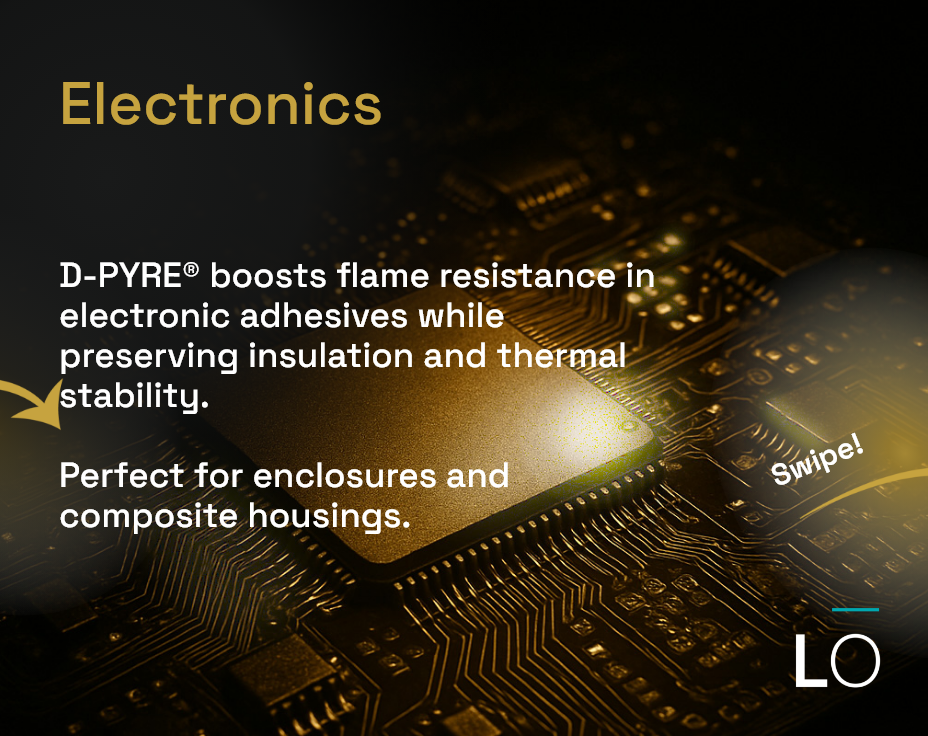
Electronics

Automotive

Building materials

Public transport

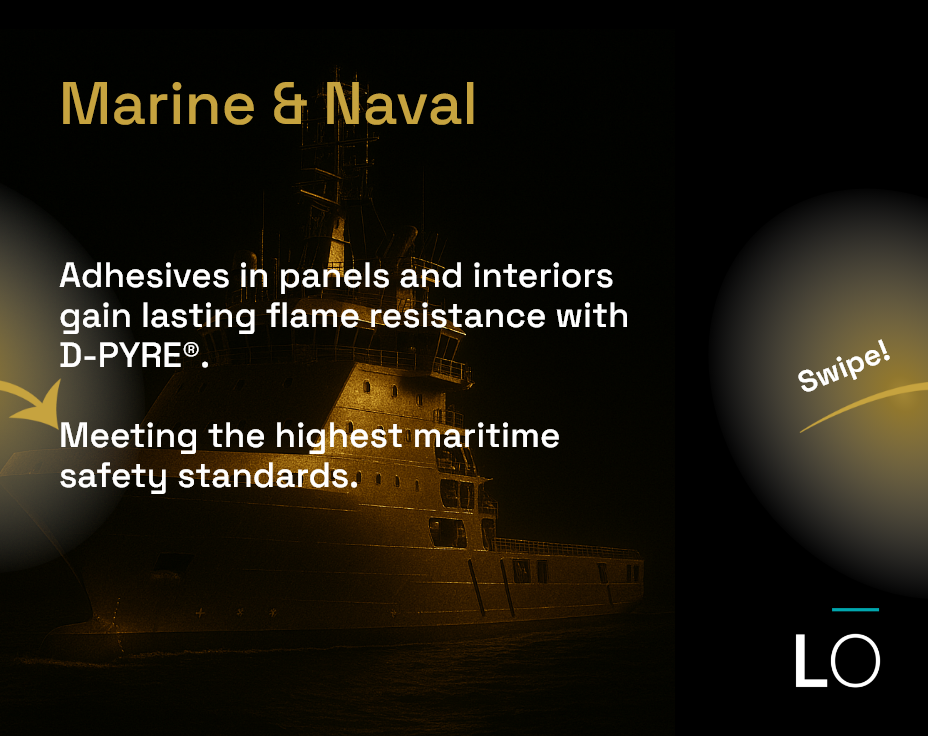
Marine
Fight fire with D-PYRE


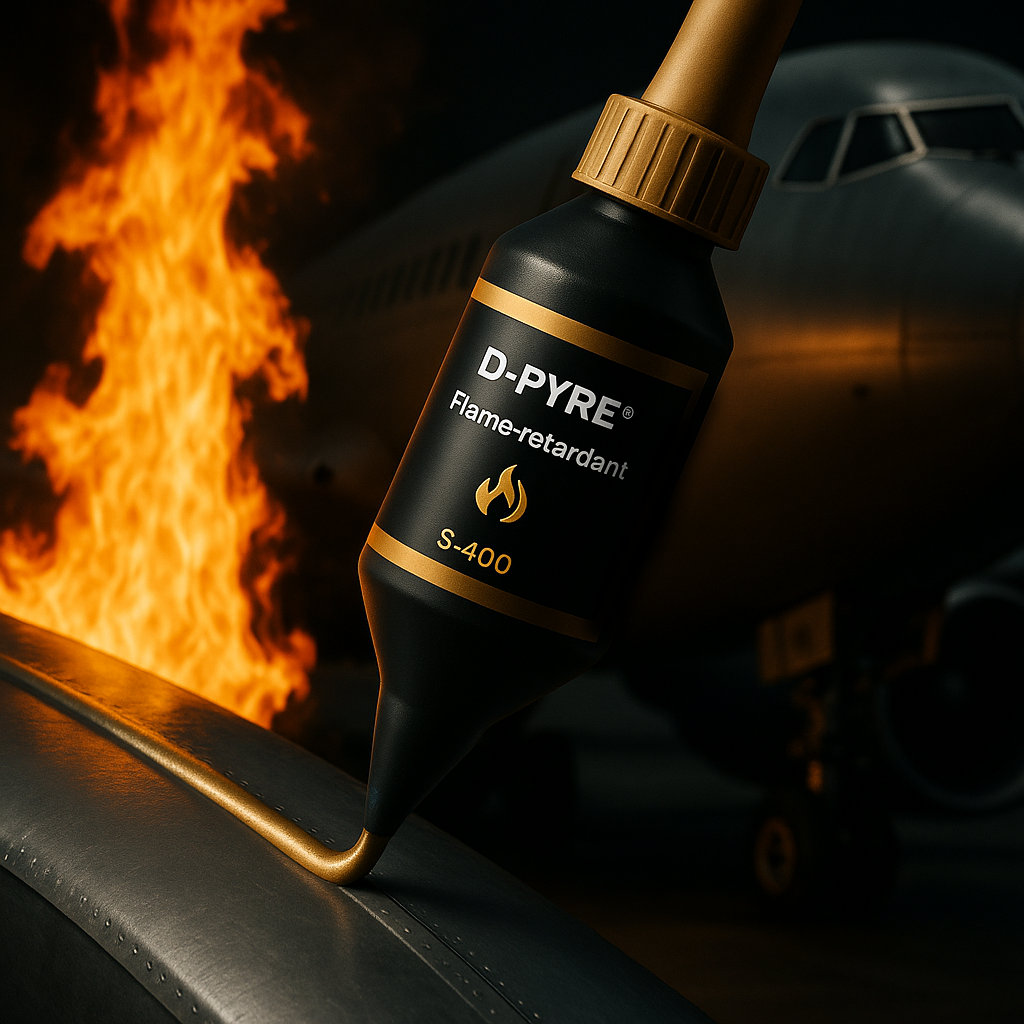
Partner with us in developing non-toxic adhesives!
Interested in testing D-PYRE in your materials?
We are actively seeking research and development partners.
Contact us to collaborate on next generation, non-toxic adhesive solutions.

Supporting SDG 9 and 12
Adhesives enhanced with D-PYRE® particularly support SDG 9 by driving innovation in advanced, non-toxic material design for industrial applications, and SDG 12 by enabling safer chemical use and promoting sustainable manufacturing through the replacement of hazardous flame retardants.